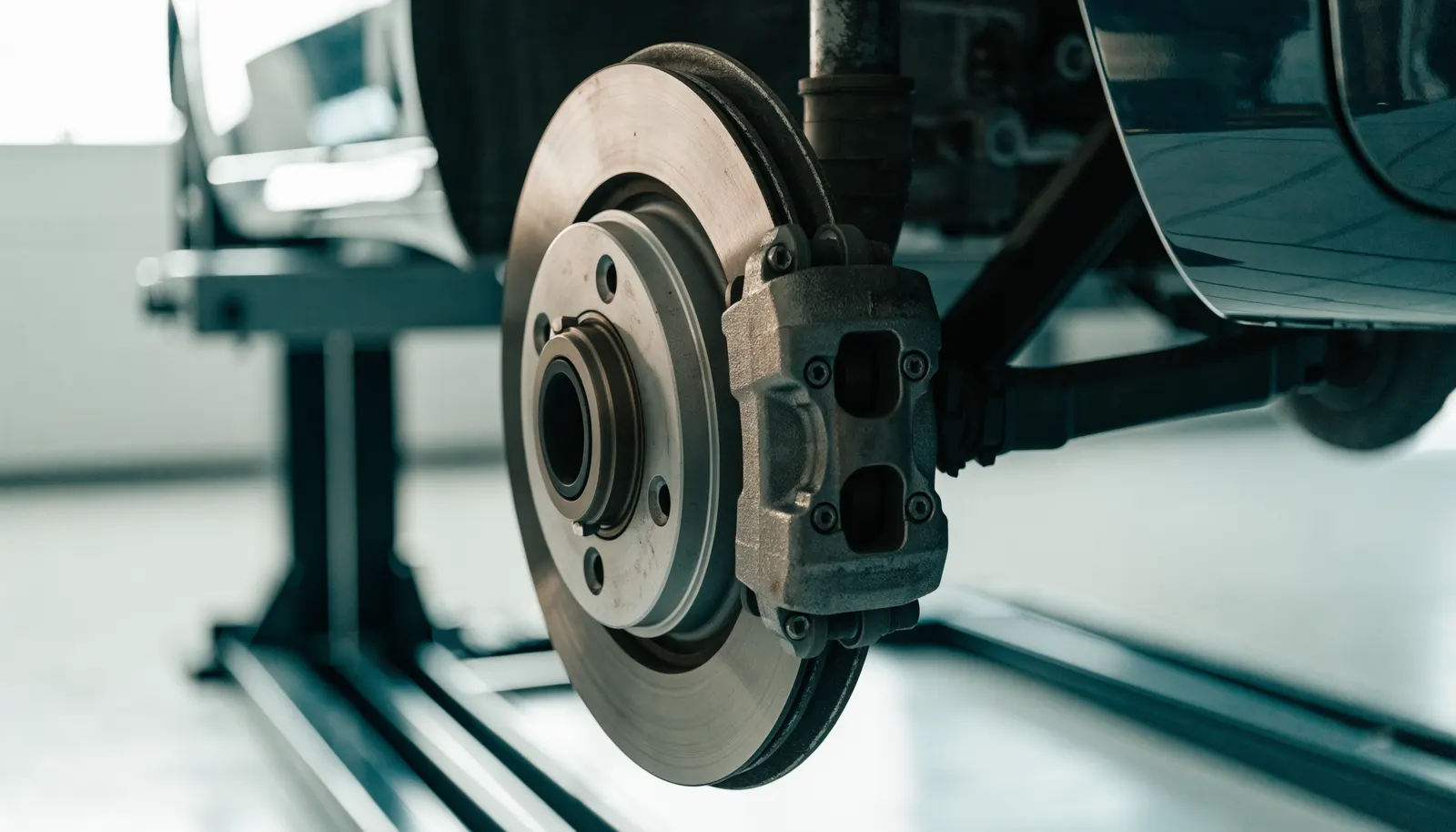
Brake Repair in Chattanooga
Brakes almost never quit all at once. They warn you first, usually with a squeal that turns into a grind, and the bill grows every week the noise gets ignored. We measure what is left, show you the numbers, and quote it before anyone picks up a tool.
- ASE-certified technicians
- 12-month / 12,000-mile nationwide warranty on covered work
- CarFax Top-Rated Service Center, 6 years running
Sounds familiar?
- A high squeal when you slow down, worse in the morning
- Grinding, which usually means the pads are gone and metal is on metal
- The pedal sinks toward the floor or feels spongy
- The car pulls left or right when you brake
- The steering wheel shudders when you slow from highway speed
- It just takes longer to stop than it used to
Most brake quotes fall apart on the rotors. A shop either replaces them every time because it is easier, or skips them and lets a warped rotor shake your steering wheel six weeks later. We measure instead. If the rotor is above minimum thickness and runs true, it stays.
A squeal is not always urgent. Some pads have a wear tab designed to sing at you months before anything is dangerous, and some squeal because of overnight surface rust that goes away in three stops. Grinding is different. Grinding means the friction material is gone and you are cutting into the rotor, which turns a pad job into a pad and rotor job.
Every brake repair carries a 12-month, 12,000-mile warranty on covered work, and we log the service to CarFax so it shows up in your vehicle history.
More on brake repair
Brakes squeaking
Squeaking brakes are the most common brake complaint we hear, and usually the least urgent. Many pads carry a thin metal tab that's built to squeal against the rotor once the pad gets low, which buys you weeks of warning. A squeak on a damp morning that fades after a few stops is usually surface rust, and it's harmless.
Brake noise
Different brake noises point at different parts, so the sound itself narrows things down fast. Grinding usually means metal on metal. A click when you first press the pedal is often loose caliper hardware, and a pulsing thump that follows wheel speed tends to be a rotor. Tell us when it happens, cold or warm, light pedal or hard stop, and we've got a head start before the wheel comes off.
Brake inspection
A brake inspection here means the wheels come off and someone measures. We check pad thickness at all four corners, rotor thickness against the manufacturer's minimum, and the calipers, hoses and fluid. You get the numbers written down, so you can see how close to the limit you actually are.
Drum brake repair
Plenty of trucks and smaller cars still use drum brakes on the rear axle, and they're easy for a shop to treat as an afterthought. Drums wear their shoes, wheel cylinders start to leak, and self-adjusters seize, which is usually why a parking brake stops holding or the pedal sits lower than it should. We service drums the same way we do discs: measure, check the hardware, and replace only what's worn.
ABS brake repair
When the ABS light comes on, your regular brakes still work, but the anti-lock system that keeps the wheels from locking in a hard stop has switched itself off. The usual cause is a wheel speed sensor or its wiring, which sits right next to the wheel and takes a beating from water, grit and potholes. We read the ABS module's codes, test the sensor that set them, and fix that instead of guessing at the pump.
Brake line repair
Steel brake lines rust from the outside in, and on an older vehicle the first sign is often a wet spot near a wheel or a pedal that slowly sinks. A leaking line is one of the few brake problems that can't wait, because the system loses pressure every time you press the pedal. We replace the damaged section or the whole line, bleed the system, and pressure-check it before the car leaves.
Brake caliper repair
A sticking caliper keeps squeezing the pad against the rotor after you let off the pedal. You'll notice a pull to one side, a hot smell after a drive, or one wheel much dirtier with brake dust than the others. Sometimes the fix is cleaning and lubricating the slide pins, and sometimes the caliper itself needs replacing, so we check which before quoting.
Parking brake repair
The parking brake, or emergency brake, is easy to forget about until the car creeps on a Chattanooga hill with the lever pulled. Cables stretch and seize, rear shoes wear out, and electronic parking brakes throw a warning light when a motor or switch fails. We find which piece stopped doing its job, then adjust or replace it.
Brake fluid flush
Brake fluid absorbs moisture over time, and water in the lines lowers the fluid's boiling point and corrodes parts from the inside. Many manufacturers call for a brake fluid service every two to three years, but intervals vary, so we test the fluid instead of going by the calendar. When it's due, a flush replaces all of it, not just what's in the reservoir.
Brake Repair questions we get a lot
How much does a brake job cost in Chattanooga?
It depends on the vehicle and on whether the rotors can be reused. Pads alone on a common sedan sit well below a pads-and-rotors job on a heavy truck. We inspect first, then give you a written quote before any work starts, so the number you approve is the number you pay.
How long does brake service take?
Front or rear pads and rotors on most vehicles take about two hours. If a caliper is seized or a line is leaking, it takes longer, and we will call you with the revised quote rather than adding it to the invoice quietly.
Do I have to replace the rotors too?
Not always. We measure rotor thickness against the manufacturer minimum and check for runout. If there is enough material and the rotor runs true, we reuse it. If it is under spec, replacing it is the only safe call.
Is it safe to drive with squeaking brakes?
Squeaking usually means the wear indicator is doing its job and you have time to plan the repair. Grinding, a pedal that sinks, or a brake warning light means stop driving it and call us. If you are not sure which one you have, bring it by and we will listen to it with you.
Why are my brakes squeaking?
Most often it's the wear indicator telling you the pads are getting low, or overnight surface rust that clears in a few stops. Glazed pads and missing anti-rattle hardware squeak too. We measure the pads so you know which one you have and how much time is left.
What does grinding brake noise mean?
Usually that the pad material is worn through and the steel backing plate is touching the rotor. That's the point where a pad job starts to include rotors, so it's worth getting in this week rather than next month. If the pedal feels different too, stop driving it and call 423-556-8744.
How often should I get my brakes inspected?
Once a year is a good habit, and any time the brakes start to sound or feel different. The safety inspection that comes with an oil change here includes a look at the brakes, so most people get a check without a separate trip.
Do drum brakes need maintenance?
Yes, though less often than front disc brakes. Rear shoes tend to last a long time, but the wheel cylinders and adjusters need checking, and a drum worn past the maximum diameter stamped on it has to be replaced. We check them whenever the rear wheels are off.
Is it safe to drive with the ABS light on?
Your normal brakes should still stop the car, but you won't have anti-lock help on a wet road or in a panic stop. If the red brake warning light is on as well, or the pedal feels wrong, don't drive it. Otherwise get it checked soon and leave extra following distance until then.
Can a rusted brake line be repaired?
The rusted section gets replaced with new line and proper fittings, never patched or clamped. If one line is badly corroded, we look at the rest too, since they've all lived under the same car. You see what we found before we quote it.
What are the signs of a bad brake caliper?
A pull to one side while braking, a burning smell, pads worn unevenly, or one wheel noticeably hotter than the others after a drive. A leaking caliper can also make the pedal feel soft. Any of those is worth a look this week.
Why won't my emergency brake hold?
Most often a stretched or seized cable, worn rear shoes, or an adjuster that has stopped adjusting. On cars with an electronic parking brake, a failed motor or switch is common. It's usually a straightforward repair once someone finds which part it is.
How often do I need a brake fluid flush?
Check your owner's manual, which for many vehicles says every two to three years. We test the fluid's moisture content when the car is in, so you'll know whether yours is actually due rather than paying for one it doesn't need.
Related services
Wheel Alignment and Balancing
Pulling to one side, uneven wear, or a shaking wheel.
See detailsSteering and Suspension Repair
Clunks over bumps, a wandering wheel, or a rough ride.
See detailsCheck Engine Light Diagnostics
A code is a starting point, not a diagnosis.
See detailsConveniently located on Hixson Pike
We are on Hixson Pike in Chattanooga, Tennessee, easy to reach from Hixson, Red Bank, Soddy-Daisy, Signal Mountain, and the rest of the Chattanooga area. Walk in, or call to schedule a time that suits you. Mornings are usually the shortest wait.
This is a local shop in a community we live in. Whether it is the family car, a commuter, or a work truck, the location makes it an easy stop heading in or out of Hixson. Most of our customers come back because of how they were dealt with the first time, which is the only advertising that actually works.
Call (423) 556-8744Hours
- Mon - Fri8:00 AM - 5:30 PM
- Saturday8:00 AM - 3:00 PM
- SundayClosed
Hixson Pike, Chattanooga, TN

Need brake repair in Chattanooga? Let's take a look.
Hixson Pike, Chattanooga, TN · Mon-Fri 8-5:30 | Sat 8-3 | Closed Sunday
Rather not call? Tell us what it is doing.
Describe the noise, the light, or the leak. We will get back to you with what it probably is and what it takes to find out for sure.